Human beings are hard wired for stories – be it lounging around a campfire or being scared witless in a darkened cinema.
Stories frame ideas, provide lessons, capture memories, create the future and connect us with our friends and family. And, in our world flooded with information and data they help us make sense of what’s going on in simple easy to remember ways.
You can use stories to influence, inspire and persuade anyone that comes into contact with your business: staff, suppliers and customers.
They help you build your brand, market with meaning, sell more, promote new products, deliver services, motivate your staff and inspire your clients.
We can use them in written communications, face-to-face encounters, meetings, water cooler chatter, formal presentations, marketing brochures, on websites and in social media.
Stories help you lead, follow, encourage, chastise, facilitate and brainstorm in subtle and powerful ways.
They can be 140 characters in length, 3 minutes of video or as long as your report or book needs to be.
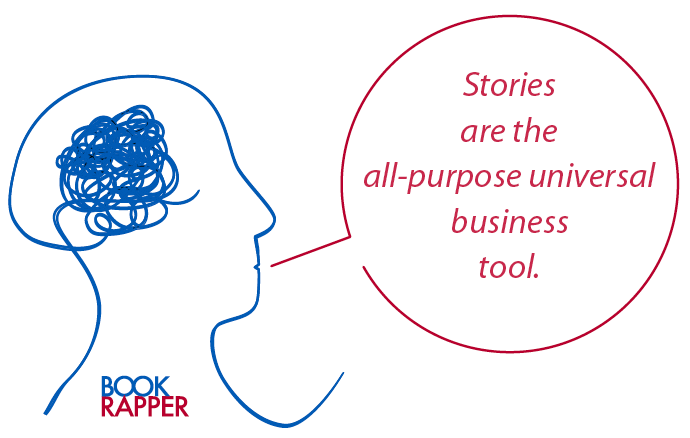
Stories are the all-purpose universal business tool.
[Tweet “Why you need stories in your business #tellyourstory”]
Actions
Make a list of the stories you currently share in your business.
- Are they stories about your future? The Economy? Your great staff?
- Do you have any stories on your website and promotional material?
- How do you tell stories to your clients?
Source
This is an excerpt from Book Rapper’s The Long Tale as derived from Valerie Khoo’s book Power Stories.