This is the third in a series of 14 marketing trends adapted from Seth Godin’s book Meatball Sundae.
Where is the Profit?
What is the most profitable part of your business?
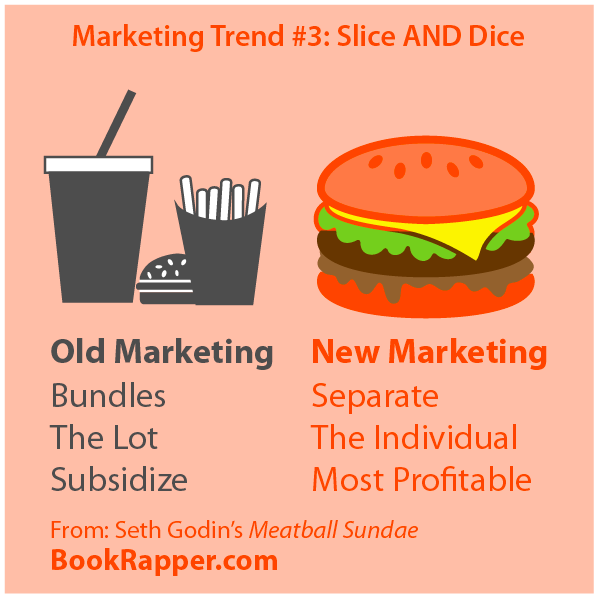
In the Old Marketing, one product line typically subsidised another and as a result the bigger whole that was created became more important. For instance, McDonalds makes enough money from its drinks so it can afford to sell you a cheap burger. Yellow Pages profits from individuals who bundle their listings together with other people into a single resource.
In the New Marketing, the whole has been cut up into pieces. Google and the other search engines have dismantled the world, they’ve sliced it up into individual pieces. Keyword searches mean we no longer enter web pages via the home page, we go straight to the piece we searched for. The same applies to your products, we don’t want all those bundled extras, only the bit we truly want.
Previously, where newspapers and magazines bundled articles with their ads, now we can have the article and ignore the ads. Similarly, we don’t need the Yellow Pages when we can search online for individual businesses. That spells big trouble for these industries.
This trend is the thumb for all others. It’s what separates New Marketing from its ancestry primates and, it may force you to rethink your entire business model.
[Tweet “Bundles used to work, now it’s slice and dice #marketingtrends #3”]
Source
This is from the Book Rapper issue Marketing How-Now that is derived from Seth Godin’s brilliant book Meatball Sundae.