This is the third of six in a series of self-leadership trends adapted from Daniel Pink’s book A Whole New Mind. Previously in this series were:
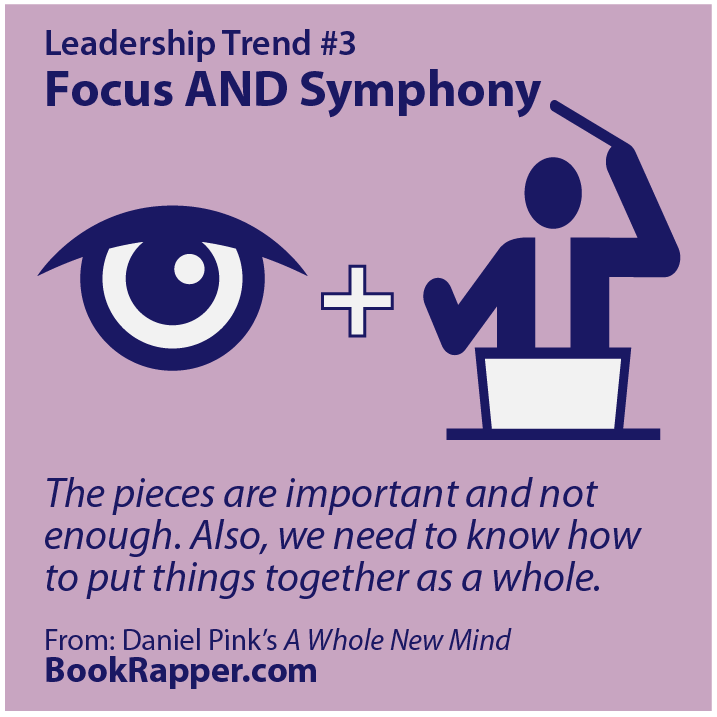
In the world of the factory and the Industrial Revolution we needed focus and specialisation. Today in our knowledge economy knowing how all the pieces fit together into a new whole is crucial. Daniel Pink calls this Symphony and if you want to lead then you need to become a Conductor. Analysis continues to be important and we need to couple this with synthesis.
How to Lead Your Symphony
Here are five things you can do today to help you lead your symphony more effectively…
- Learn to Draw – Learn from Betty Edwards ‘Drawing on the Right Side of the Brain’. You don’t draw things; you draw the relationships between them.
- Study Relationships – Start mapping how different things connect, relate and fit together. To explore symphony, explore relationships.
- Mind Map – Learn Tony Buzan’s Mind Mapping tool for right brain planning & connecting ideas. Create strategies and take notes in a whole new way. Treasure!
- Visit McDonalds – Watch this remarkable business machine and other franchises in action. Systematize and strategize your business.
- Keep a Metaphor Log – Compile a list of the metaphors you encounter. Make up new ones. Rethink your business as a series of metaphors.
[Tweet “Five Ways to Focus on the Whole #self-leadership”]
Source
This is from the Book Rapper issue How to Think Right that is derived from Daniel Pink’s best selling book A Whole New Mind. The full Book Rapper summary is available here.