
What is an Innovation Sandbox?
The opposite of hiding innovation is to create a public place to play – an Innovation Sandbox to promote rapid iterations.
Did you play in the sand as a child? This might have been in your backyard sandpit or perhaps at the beach. It was a chance to get dirty, digging and shaping the sand. It was a chance to play, learn and explore. An innovation sandbox uses this analogy to provide a safe place for innovators to get dirty, dig and shape ideas.
Best of all, it’s about experiments, testing and making rapid change through creating prototypes. The goal is to make multiple iterations to see what improves things – and what doesn’t.
Eight Guidelines for Building Your Innovation Sandbox
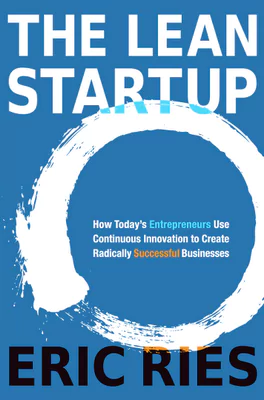
Eric Ries’ book The Lean Startup is the bible for entrepreneurs starting new ventures – within or outside of organisations.
Here are eight guidelines for building your innovation sandbox…
- Start small.
- Any team can create a true-split test for parts of the product or service.
- No experiment can affect more than a specified number of customers.
- Every experiment has to be evaluated on the basis of a single standard report of five to ten actionable metrics.
- One team must see through the whole experiment from start to finish.
- No experiment can run longer than a specified amount of time.
- Every team that works inside the sandbox and every product that is built must use the same metrics to evaluate success.
- Any team that creates an experiment must monitor the metrics and customer reactions.
Book Rapper
This is an extract from the Book Rapper issue Pioneer: How to Create and Manage Innovation. It’s derived from Eric Ries’ classic book The Lean Startup: How Today’s Entrepreneurs Use Continuous Innovation to Create Radically Successful Businesses.
Previously