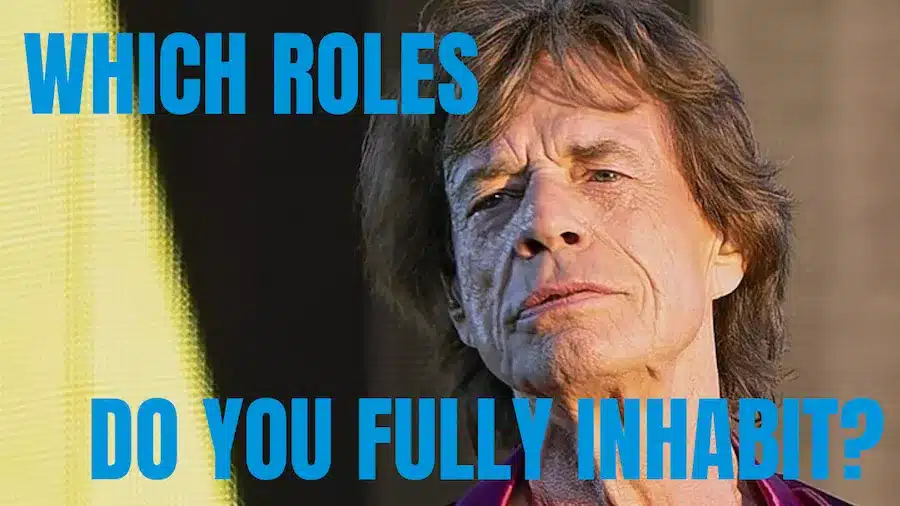
I was listening to David Marchese interview Mick Jagger for The New York Times Interview when one word stopped me: Inhabit.
Marchese didn’t ask whether Jagger could still perform songs he’d written fifty years ago; he asked whether he could still inhabit them.
That caught my attention because it felt like an unusual but very specific thing to say.
What does it actually mean to inhabit an experience?
Young footballers often say, “I finally feel like I belong.” That’s interesting because they were talented enough to be selected weeks or months earlier. It’s not like their ability has suddenly changed.
But what has changed is their relationship with the environment: The stadium no longer feels intimidating; the pace of the game no longer overwhelms them and they no longer feel like they’re imposters in a team of champions.
They belong. And to use Marchese’s word, they inhabit the game.
Method actors pursue something similar. They don’t just perform a character; they attempt to inhabit them, to experience the world as that person would.
But this creates a tension because sometimes, when filming finishes, the actor struggles to leave the role behind.
It’s not just that they inhabit the character, sometimes the character begins to inhabit them.
Perhaps this isn’t unique to actors. We’ve all met people who never seem to leave work. At the age of 91, my Mum is still mothering me.
This happens when the role and the person become fused.
In listening to Mick Jagger, I expected to hear someone completely absorbed by the identity of “rock star.” But I heard almost the opposite.
He spoke about deliberately keeping ordinary parts of his life, spending time outside the celebrity world and protecting friendships and family from it.
He also made a fascinating observation about performing in front of tens of thousands of people. He said, “You need ego.”
But it wasn’t the words that stood out, it was the way he said it. There was no trace of someone trying to prove they were a rock star. Jagger wasn’t celebrating ego and he wasn’t apologising for it either. He was simply describing it as something you need for that role. His ego wasn’t running him, he was choosing when to use it.
I’d always thought of ego as something that either gets in the way or takes over. Jagger was describing something more deliberate: a tool you pick up when you walk on stage and put down when you walk off it.
That got me thinking about whether mature experience changes more than what we notice. Perhaps it also changes our relationship with our identities.
When we’re younger, we’re often trying to become someone: the successful executive, the respected expert, the rock star. Our identity is something we first build, then constantly maintain. I have written several books, but I’m only an author if I keep writing.
Perhaps maturity looks different. Perhaps it isn’t inhabiting one identity forever, but being comfortable enough within yourself to move between many roles without losing the thread of who you are.
Mick Jagger is a rock star, father, friend and performer. None of these roles defines him completely. He inhabits each of them and freely steps between them.
We often think experience gives us knowledge. But perhaps what it really gives us is the ability to inhabit more of life without being consumed by any single part of it.
Take a moment to think about the roles you play. Which ones do you fully inhabit? Which have you only just begun to inhabit? And are there any that you have outgrown but haven’t put to bed yet?
More Field Notes
This is Field Note #13. Field Notes are observations from my ongoing enquiry into experience. To learn more about how to make the most of your experience, read these posts next: