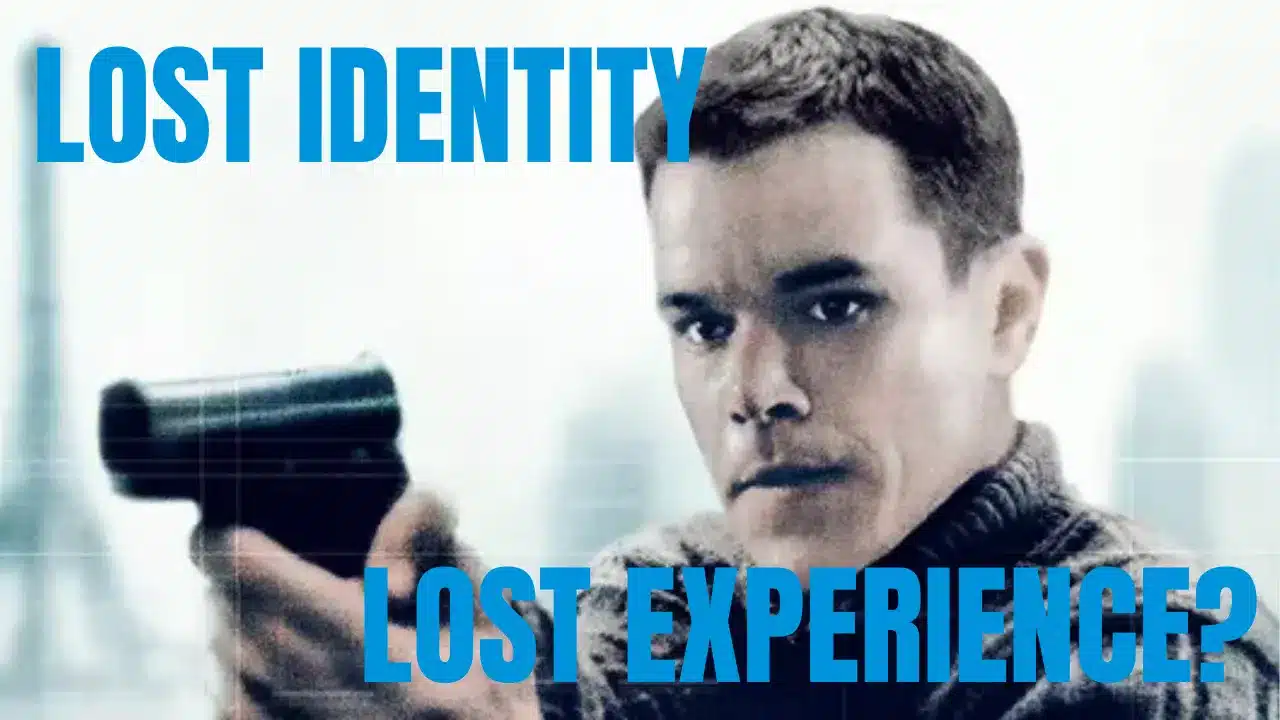
In The Bourne Identity, Jason Bourne has no idea who he is. He has amnesia, which means he doesn’t remember his past and can’t figure out why someone wants to kill him.
Yet, when he sits down in a roadside cafe he casually says:
“I can tell you the license plate numbers of all three cars out front…”
“the waitress is left-handed…”
“the guy at the counter weighs about 215 pounds and knows how to handle himself…”
“the best place to find a gun is the cab of that grey truck…”
Then he asks the question that stops the movie: “How do I know all that and not know who I am?”
Most people assume experience is memory: the more you remember, the more experienced you become.
But Bourne completely breaks that assumption. While he has forgotten almost everything about his past, he hasn’t lost what his experience has created. His experience is still shaping his perception, even though he has forgotten the events that created it.
His experience hasn’t disappeared, instead it’s become instinct. He’s not consciously scanning the room, he’s doing it automatically. He’s noticing things like escape routes, sight lines, threats, weapons, number plates…
His training has reorganised his attention. This isn’t just true for assassins, it’s true for all experts.
An experienced architect walks into a building and notices structural problems nobody else sees.
A football coach notices momentum shifting before the scoreboard changes.
A doctor notices subtle symptoms long before the test results arrive.
An experienced leader notices patterns of behaviour that predict whether a team will succeed or fail.
They’re not thinking harder; they’re seeing differently.
And we presume their perception is shaping their identity. But one of the fascinating things about Bourne is that he doesn’t know his identity. This suggests identity isn’t the important question.
A more interesting question is: What has your experience taught you to notice?
Our job titles tell us very little.
“I’m a leader.”
“I’m a consultant.”
“I’m a designer.”
They describe what we do, but they rarely describe how we see and they don’t distinguish one leader from another.
Perhaps that’s what experience really is. It’s not a collection of memories and it’s not even accumulated knowledge.
Perhaps experience is what remains after years of practice have quietly changed what you notice.
Jason Bourne had forgotten his biography, but he hadn’t forgotten how to see. And that’s the deepest mark experience leaves on all of us.
If you stripped away your job title, what would your experience actually reveal about how you see the world?
More Field Notes
This is Field Note #12. Field Notes are observations from my ongoing enquiry into experience. To learn more about how to make the most of your experience, read these posts next: