When I’m coaching beginners in pickleball, one of the first questions I ask is: What sports have you played?
The answers vary: tennis, squash, badminton, table tennis, other sports or no sporting background at all.
While this seems like a straightforward question about someone’s skill level, I’m actually asking: What experience are you bringing with you?
Everyone walks onto the court carrying some experience.
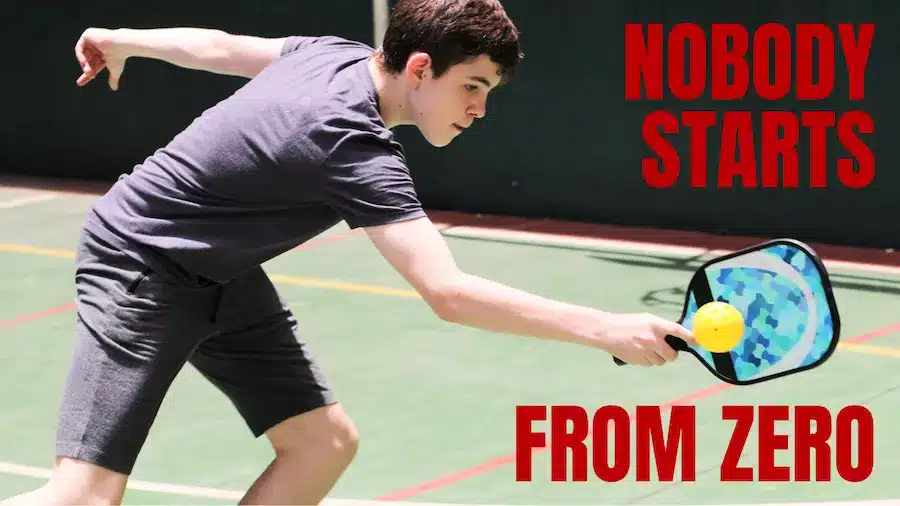
Someone who has played tennis already knows how to track a moving ball, use a racquet, move around a court and anticipate an opponent. Badminton, squash and table tennis players bring different advantages. Nobody is beginning at zero.
Their previous experience prepares them for what comes next. But that same experience can also get in the way.
Sometimes I can almost see someone’s previous sport in the way they hit the ball.
The tennis player swings too much. The badminton player has to adjust to a bouncing ball. The squash player no longer has walls. And the table-tennis player faces a completely different scale of court and movement.
These aren’t necessarily bad habits. They were perfectly good responses in the environment in which they were learned.
The problem isn’t the experience. It’s the fit between that experience and the new situation.
We’re often told that entering something new requires us to “unlearn” what we’ve learned. But you’re not trying to make the tennis player forget tennis.
Quite the opposite; much of their tennis experience is enormously useful. But they do need to discover:
- What transfers?
- What needs adjusting?
- And what doesn’t apply here?
We don’t need to unlearn our experience, but we do need to recalibrate it.
Just as you’ve learned pickleball, the game can change.
Calibration is an ongoing process. We may start with the shift from tennis to pickleball. But then we have to recalibrate each time we play to factor in the conditions and our ever-changing opponents.
Experience gives us expectations. The situation tells us whether those expectations still fit.
We do this everywhere.
The difficulty may be greatest when the new situation looks almost like something we’ve encountered before.
When something is completely unfamiliar, we know we don’t know what to do.
The more dangerous situations may be those that look familiar enough to make us think we do.
While ‘What experience do you bring?’ might be useful, it may not go far enough.
Perhaps we need to ask: What has this situation changed that my experience hasn’t caught up with yet?
You’re standing at the baseline. You’ve played enough games to know what you’re doing. You know how the ball usually travels. Then you hit it and the wind catches it.
Experience gives us an expectation, reality gives us feedback.
Expertise may lie not in being perfectly calibrated, but in becoming better at recalibrating.
Where in your work right now are you most in need of recalibration? And what’s stopping you from seeing it?
More Field Notes
This is Field Note #23. Field Notes are observations from my ongoing enquiry into experience. To learn more about how to make the most of your experience, read these posts next: