How to Lead a Decentralized Organization
Derived from…
Ori Brafman and Rod A. Beckstrom; The Starfish and the Spider
Previously
How to Decentralize Your Organization
RAP6: The CEO and the Catalyst
Where a centralized spider demands leaders who take charge, the starfish requires a completely different kind of leader. Instead of a CEO, they need a Catalyst. Their qualities will be very different.
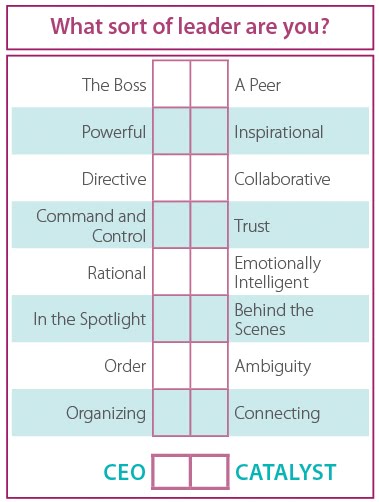
Leadership Quiz
Are you a traditional CEO-type leader or a Catalyst? Take our test to find out…
Catalyst Leadership Qualities
Here’s a list for you to consider…
Genuine Interest in Others
A CEO doesn’t really have to be genuinely interested in others, they can just bark orders. However, a peer or an equal cannot take that tack and expect to succeed.
Loose Connections
A CEO may have a team to call on to get things done whereas a catalyst will have an extensive network of diverse contacts.
Mapping
It’s not just who you know, it’s who they know and how they fit in the bigger picture. Catalysts look for potential advocates and map out possible relationships where everyone wins.
Desire to Help
Catalysts really do want to help you. It’s not always about what you can get from your contacts.
Meet People Where They Are
A traditional leader with command and control is more likely to demand action. When you’re running a team of volunteers or simply working with a decentralized group, this has less likelihood of success. The ability and willingness to empathize and meet others where they are at is more important.
Emotional Intelligence
Whilst essential for any successful person, the willingness to cede control and loosen the reins of command in a starfish organization requires a higher degree of emotional intelligence. One cannot rely on position or power for your identity.
Trust
If you can’t control the outcome and you can’t enforce errant behaviour, you need to focus on what you can influence: build relationships based upon trust.
Inspiration
To inspire action from people without personal gain, you need to instil inspiration. This is not about the people involved, it’s about the bigger purpose.
Tolerance for Ambiguity
A CEO may demand clarity but don’t expect it in a starfish organization. To be a great catalyst you need to be able to ride ambiguity as an opportunity for creativity and innovation.
Hands-Off Approach
The CEO is often the centre of attention whereas the catalyst gets out of the way and let others step into the breach to drive the organization forward.
Receding
Whilst a CEO may bask in the glory of victory, a catalyst is likely to have already left. A catalyst who stick around too long risks becoming a CEO and stifling growth by centralizing operations.
What happens when the way you’ve learned to succeed is no longer a way you’re…
Several decades ago I was on a bus trip winding through the Black Hills of…
Put a group of successful, educated adults into a training room and something strange can…
I was listening to David Marchese interview Mick Jagger for The New York Times Interview…
Michael Henderson's anthropology professor gave his students some unusual advice: "If you find an interesting…
Why is it that we often know exactly what to do... but still don't do…