Innovation Winners and Losers
Formula One motor racing is a hotbed for innovation. As a spectator you literally are able to see the results of innovation through the winners on the racetrack.
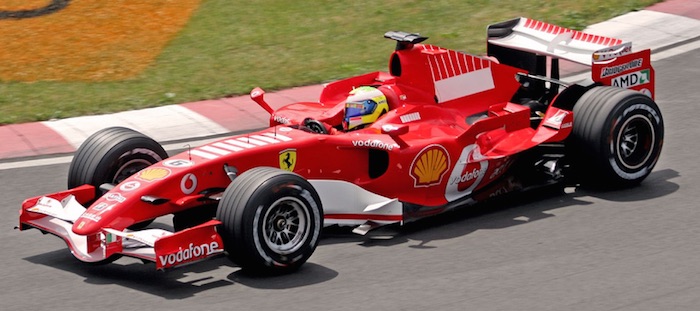
This year, Mercedes Benz have a taken a big leap in performance resulting in them dominating the F1 Championship. Ferrari has also taken huge steps forward to be second in both the drivers and manufacturers standings.
As much as innovation highlights the winners it also means there has to be some losers – someone leaps ahead and someone falls behind. This year the losers in F1 innovation have been Red Bull and the teams with the Renault engines.
Image: Wikipedia
[Tweet “Reliability Versus Performance – F1 Lessons for Business Innovation #innovation #F1”]
Reliability and Performance
Last year Red Bull was highly competitive with Aussie Daniel Ricciardo finishing in third place in the championship. He won three races and finished in the top 3 four times. In 2015, his best result after the first five races is a distant sixth.
The problem is two-fold. Not only does he not have the speed to match the Mercedes-Benz cars of Hamilton and Rosberg, he also doesn’t have the reliability. He has blown his engine four times in only five races.
The Red Bull Team Principal Christian Horner has declared that the season is now a write-off. In other words they have no chance of winning the drivers or manufacturers championships.
Interestingly, he hinted that improvements in the Renault engines need to be either on reliability or performance – you can’t improve both of them at the same time. And, he suggests:
“It would be better to learn and make progress in preparation for next year than be conservative. It is far easier to make a fast engine reliable than it is to make a reliable car fast. Our philosophy has always been to push performance.” Source: ABC
Business Reliability and Performance
This presents an interesting insight into innovation and how it is practiced in organisations. Usually, reliability and performance are less obvious. And, potentially this means that you can be pursuing competing forces when a focus on one would be better.
Also, as Horner suggests, it may be best to pursue performance first because it is always easier to add reliability later.
QUESTION: What type of innovation are you pursuing in your organization: reliability or performance?