Most of us think helping is about having the right answers.
We admire people who always seem to know what to say, what advice to give or how to solve a problem.
But after talking with Linda Gidlund, I’m no longer convinced that’s where helping begins.
Why I invited Linda Gidlund
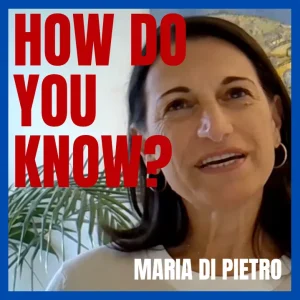
Linda was one of the people at the top of my list to invite onto On Experience.
We first met 33 years ago at Accelerated Learning events and we’ve recently reconnected through Mark Molony’s Mindfulness community.
During this time, Linda has moved between education, facilitation, coaching, volunteering and community leadership.
While these look like different areas on the surface, I’m always curious about how they connect for the people who dance between different subjects. And given the gap in time since we first met so long ago, I wanted to know how she sees the world, had changed.
What Surprised Me
Given Linda’s background, I expected we would spend most of our time talking about learning and education, especially since this was what we had in common.
Instead, we spent much of the conversation talking about curiosity, how we both tend to take things apart and put them back together, Linda’s experience moving countries and about the stories behind people’s behaviour.
At first, these felt like separate conversations, but slowly they began to reveal the same pattern.
Adults and Sixth Graders
One of the interesting things that Linda observed through her career was how adults had a tendency to act like sixth graders. She saw this as learners entered her classrooms and even as her husband visited his Mum. They would act out the same behaviors that they did when they were in grade six losing confidence and being nervous.
While that is amusing, it also tells us how experience and the context we step into shapes our confidence and way of being.
How much of our confidence belongs to us, and how much belongs to the environments we’ve learned to navigate?
Moving to Australia.
One might presume that the common language of English would make a transition from living in the US to Australia a simple one. Not so for Linda.
Early in her life in Australia, she was invited to a work social function and told to ‘bring a plate’. She was confused this. What does this mean? Later that night, she had to ask her husband what it meant. It wasn’t to be taken literally. It wasn’t about the plate itself but bringing some food on that plate.
This shows how subtle our perception can be. It’s teaching us that meaning isn’t just in ours words but also inside our experience.
What Are You Not Seeing?
Throughout the conversation I kept hearing Linda return to the same idea from different directions.
Whether she was talking about education, facilitation, community or caring, she always seemed interested in helping people notice something they hadn’t noticed before.
Then she said something that seemed to capture that thought and pull the whole conversation together: “Helping people see what they’re not seeing.”
At the time I heard it, it struck me as interesting. But it was only when I edited the video and read the transcript that I realised its importance.
It’s not really describing a technique. Rather, Linda was describing what decades of experience had taught her to do.
What changed for me
Before this conversation I probably would have said Linda is an exceptional learner. But now I’d describe her differently.
Yes, learning was core to her work and identity, but I started noticing a deeper thread about caring for and helping others.
While many people may begin with a value around ‘being helpful’, this is not the case with Linda. She didn’t set out to be helpful in this way.
Instead, decades of learning, reflecting and paying attention had changed what Linda noticed in other people. This made her better at helping.
But more importantly, it changed what she sees and now helping naturally follows.
That’s a very different interpretation about experience.
Why this matters
This made me wonder how many qualities we admire are actually consequences rather than causes?
Perhaps wisdom isn’t the ability to give advice, but a way of seeing more clearly.
If that’s true, then experience doesn’t simply make us older, it changes what becomes visible.
Linda wasn’t collecting experiences, she was quietly learning to see different things.
This is something that Michael Henderson and Philippe Guichard talked about in their On Experience conversations.
Michael had developed the ability to walk into rooms of people and notice cultural patterns naturally.
Philippe instinctively looks at designed objects and knows how to improve them.
Experience changes what we notice and as a result some things we do and pay attention to become automatic.
A Question to Consider…
If you’ve ever wondered why some people seem able to help without trying to fix people, or why certain conversations leave you seeing the world differently, then I think you’ll enjoy this episode. I’d love to know what you notice.
And a question for you to consider: What has your experience taught you to notice about people that others often miss?
More from On Experience and Linda Gidlund
If you’d like to explore On Experience and Linda Gidlund’s insights, then you might like to read these posts next: