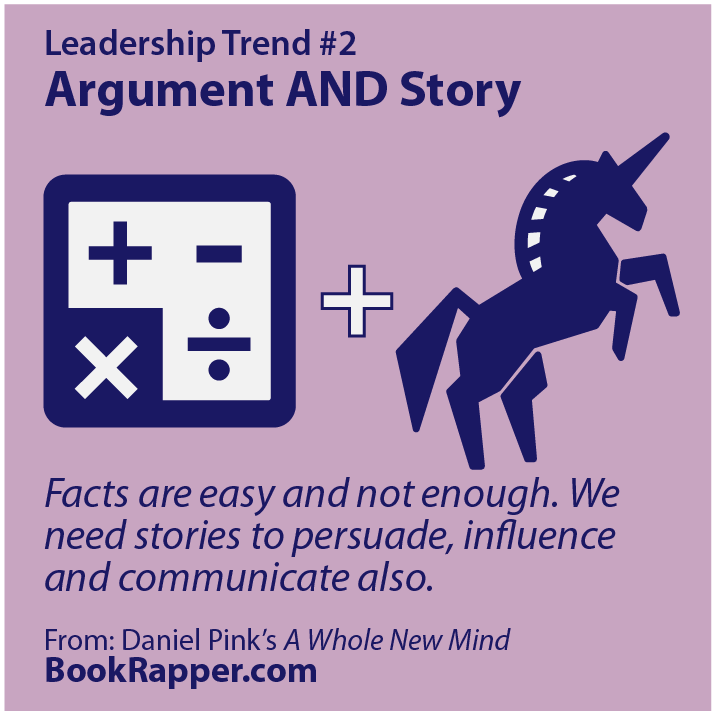
This is the second of six in a series of self-leadership trends adapted from Daniel Pink’s book A Whole New Mind. Our first in this series was: Function and Design.
Data and information is really useful. However, a reliance only on this will not present a full and engaging argument for persuading others. Plus, it’s easy for someone to put up a counter argument using other data. The key to effective communication and influence is being able to create an engaging narrative and story.
How to Engage with Story
Here are five things you can do today to engage with stories to boost your level of influence and engagement…
- Start Writing – What’s your story? Write a short story, a long book, a poem or a limerick.
- Read A Story – Grab a novel, curl up and lose your self on a deep couch or under a fragrant tree.
- Market Your Story – Create a Branding Breakthrough by telling your business story.
- Tell PR Stories – Give your story a spin and make it newsworthy so others will be interested.
- Present Your Story – Practise today; incorporate a story into your next presentation; charm your staff.
[Tweet “Five ways to engage with stories today #self-leadership #story”]
Source
This is from the Book Rapper issue How to Think Right that is derived from Daniel Pink’s best selling book A Whole New Mind. The full Book Rapper summary is available here.