I was watching Esquire Editor-in-Chief Michael Sebastian interview Aaron Sorkin.
(Source: Aaron Sorkin on Why AI Will Fail, Facebook & The Future of America)
Sorkin is one of those rare people who has experience creating stories that move audiences.
But, for most of the interview, nothing caught my attention until Sorkin started talking about how he writes.
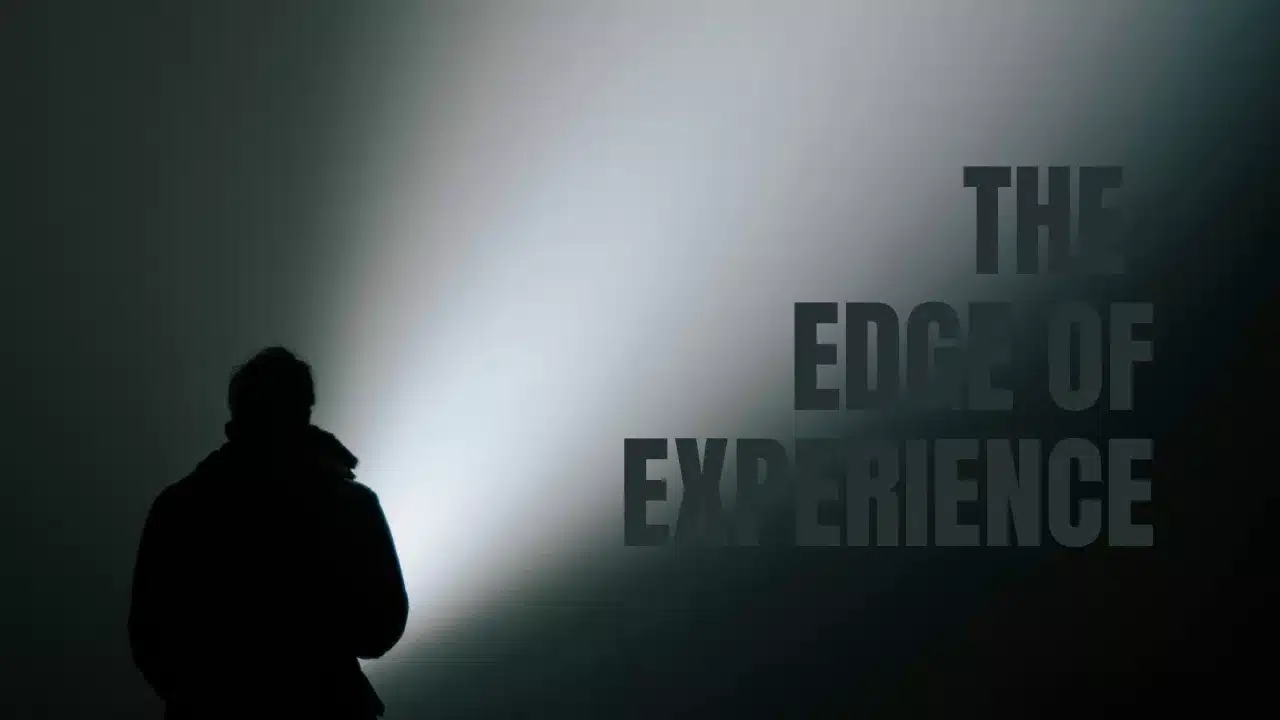
He says he doesn’t outline and often doesn’t know how a story will end when he starts. He described writing as: “…walking through woods at night with a flashlight. You can only see as far as the beam reaches, but as you move forward, you can see further.”
Later, he’s asked about AI and creativity.
He tells the story of looking at an abstract painting at a party and feeling something in response to it. Then the host came over and said, “That painting was painted by a machine.” Sorkin said, whatever he had been feeling disappeared.
From this, Sorkin makes a much larger prediction. He believes we’ll discover that it matters that art was created by people, and that we won’t feel the same connection to computer-generated characters, dialogue, stories, paintings or songs.
I wasn’t so sure about this. I had watched stories on YouTube that were most likely AI generated and yet some of them still made me cry.
That made me wonder: If an AI-generated story makes me cry, how is the emotional experience itself different from crying during a fictional story written by Aaron Sorkin?
Perhaps Sorkin’s own metaphor explains the problem: We’re all walking through the woods with a flashlight.
Sorkin has one hell of a flashlight. Decades of experience have taught him extraordinarily fine distinctions about dialogue, character, performance and human emotion. His experience has made the beam brighter. But, a brighter flashlight doesn’t necessarily allow you to see beyond the reach of its beam.
Every flashlight casts a shadow beyond its beam.
This reminded me of something I’d been thinking about while watching Alone Australia. It led me to ask: What do people do with experience when experience can’t provide the answer?
I started calling this the Edge of Experience. Sorkin has made me see another side of that edge. The contestants in Alone Australia reached their edge because the world presented conditions their experience couldn’t answer. But sometimes we reach the edge without knowing we’ve reached it.
Our experience can make the boundary difficult to perceive. And that’s the more interesting danger.
Experience doesn’t simply teach us to see more; it also teaches us what to notice and what to ignore.
An expert can’t pay attention to everything. Experience teaches them what matters and what can safely be ignored. Familiar things become patterns and actions become habits. What once required attention becomes automatic.
That’s what makes expertise efficient, but that efficiency comes at a cost.
Experience expands our perception by compressing it. We learn to see more by learning to notice less. Eventually something may appear that our existing experience can’t adequately explain: a new environment; a failure; a contradiction; a new technology.
The problem is that we may not know when this has happened. Our experience keeps giving us answers, our patterns still make sense and our flashlight still works.
The problem begins when we mistake everything illuminated by the beam for everything there is to see.
That’s when we need to open our perception again. And when the most useful questions change: What is going on here? What am I not seeing? What might now be possible?
Perhaps pioneers aren’t people who can see beyond the limits of experience. They’re people who notice when they’ve reached them.
Sorkin may turn out to be completely right. Perhaps knowing another human made something really will prove essential to our emotional relationship with art. Or perhaps we’ll discover entirely new relationships with machine-generated creativity that none of us can currently imagine.
We’re still walking through the woods and we can only see as far as the flashlight reaches.
More Field Notes
This is Field Note #24. Field Notes are observations from my ongoing enquiry into experience. To learn more about how to make the most of your experience, read these posts next:
- What Moneyball taught me about Experience
- What PIckleball taught me about Experience
- What Left-Handedness taught me about Experience